If you’re budgeting for ghost mannequin editing, here’s the short answer: most providers charge somewhere between $0.60 and $3 per image for standalone ghost mannequin work, with the low end covering simple garments in bulk and the high end covering complex pieces, rush jobs, or highly detailed neck joint work. Image Editing Asia lists ghost mannequin editing starting at $0.60 per image as a standalone service, or $0.50 per image when it’s added to a bundled package that already includes background removal and color correction.
That range is wide because ghost mannequin editing isn’t one fixed task. It’s a handful of related steps (mannequin removal, neck joint blending, symmetry correction, sometimes shadow work) and how much of that you actually need depends on the garment and the photo. This guide walks through what drives the price up or down, what a fair quote looks like, and how to estimate cost for your own catalog before you request one.
Image Editing Asia Free Trial: https://imageeditingasia.com/free-trial/
Advantage:
- Free Sign in/Sign up.
- Free Trail for 3 images (1st time).
- Files upload and download via website.
- Official invoice up to date.
- Online payment (daily/weekly/monthly).
- Summary of work and payment (paid/unpaid) history at a glance.
- Instant reply via website, Skype or any other social media.
- Unlimited Revision.
Why Ghost Mannequin Editing Costs More Than a Simple Background Removal
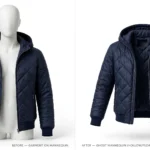
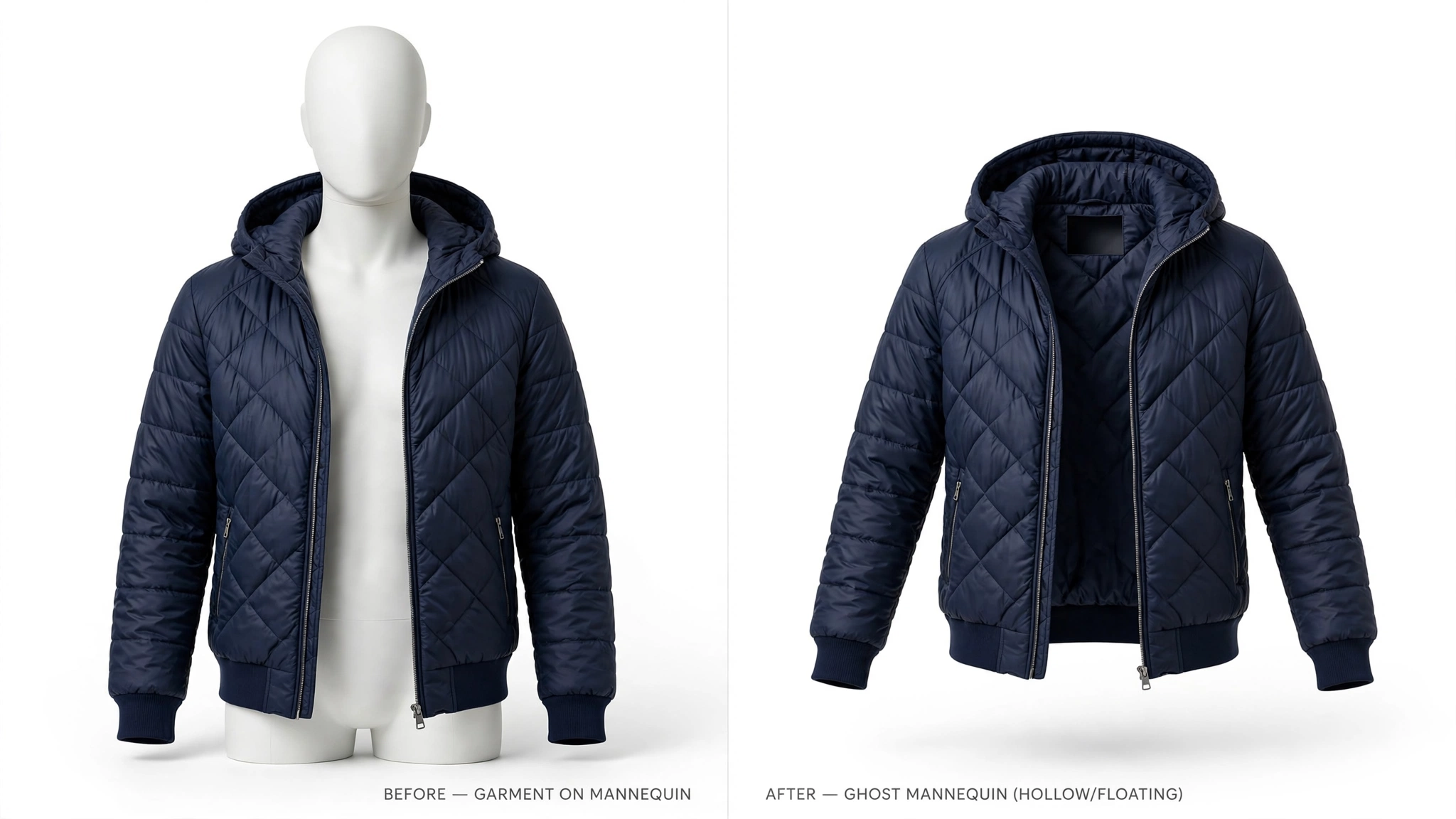
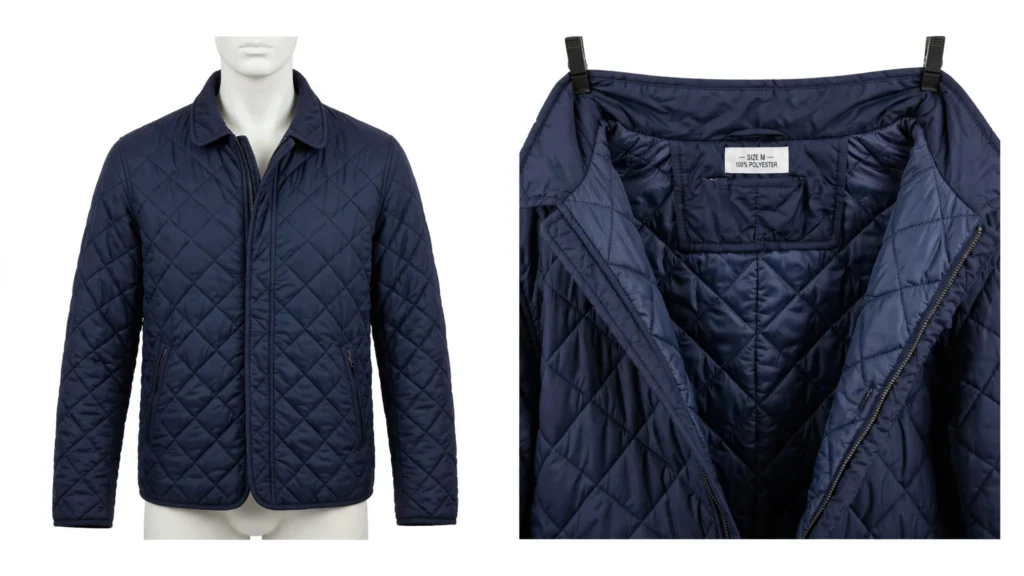
A basic background removal service works from one photo. You isolate the product, drop in a clean background, done. Ghost mannequin editing starts with at least two photos of the same garment: a front shot with the mannequin still in, and a second shot of whatever the mannequin was covering, usually the inside of the collar or neckline.
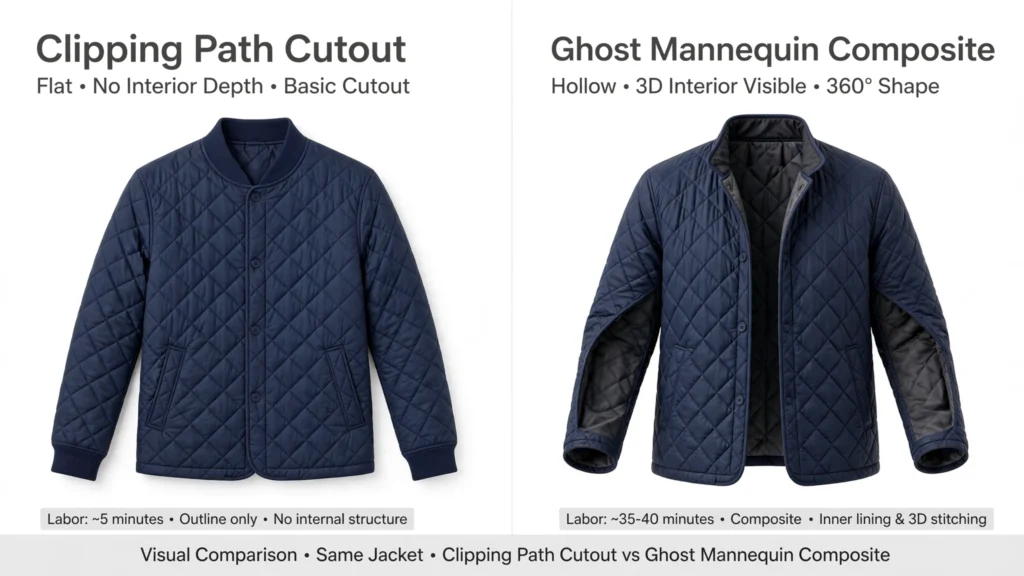
The editor then has to remove the mannequin from the first shot, blend in the interior shot so the garment looks hollow and three-dimensional, and match lighting, color, and shadow between the two source images so the seam isn’t visible. This is often called neck joint work, and it’s the part that separates ghost mannequin editing from ordinary clipping or masking. Clipping path services, by comparison, trace an outline and cut it out. There’s no compositing, no matching two separate shots, no hidden seam to hide.
That extra step is why ghost mannequin editing typically costs more per image than clipping path or background removal, even at providers who use the same base rate structure across services.
What Actually Changes the Price
A quote that just says “$X per image” without qualification is missing half the picture. Here’s what actually moves the number:
Garment complexity. A plain t-shirt or basic top on a simple mannequin is close to the base rate. A structured jacket, a hoodie with a hood, a garment with multiple layers, or anything with a complicated neckline (turtlenecks, cowl necks, wrap styles) takes longer to blend cleanly and usually costs more.
Number of source photos. Simple garments might only need two photos. Structured pieces with hidden panels, sleeves, or backs can need four to six source images per item, and each additional angle adds editing time.
Order volume. Nearly every provider drops the per-image rate as volume goes up. On Image Editing Asia’s pricing tiers, the base editing rate goes from $0.50 per image at 1-500 images to $0.45 per image at 500-1,000 images, with custom pricing above that. Ghost mannequin as an add-on follows the same logic: ordering 50 images at a time will cost more per image than ordering 2,000.
Add-ons bundled in. Ghost mannequin editing rarely comes alone. Shadow creation, color correction, and background swaps are commonly bundled with it, and each one adds its own per-image charge unless it’s already folded into a package rate.
Turnaround speed. Standard turnaround (commonly 24 to 48 hours across the industry) is priced lower than rush delivery. If you need a same-day turnaround on a large batch, expect a premium.
Revisions. Some providers include a set number of revision rounds in the base price; others charge extra past the first pass. This matters more for ghost mannequin work than simpler edits, since getting the neck joint and symmetry right sometimes takes a round or two of feedback.
Typical Cost Breakdown by Volume and Complexity
Rates vary by provider, but here’s a general shape of how ghost mannequin pricing tends to break down. Treat this as a planning reference, not a quote from any single company.
| Order Volume | Simple Garments (t-shirts, basic tops) | Complex Garments (jackets, layered pieces, detailed necklines) |
|---|---|---|
| Under 100 images | Higher end of the range, often $1-3 per image | Higher end, often $2-4+ per image |
| 100-500 images | Mid-range, often $0.60-1.50 per image | Mid-to-high range, often $1.50-3 per image |
| 500-1,000+ images | Lower end, volume discounts typically apply | Still elevated versus simple garments, but volume discounts apply |
Image Editing Asia’s own published rate is $0.60 per image for standalone ghost mannequin editing, which sits at the lower end of that range, reflecting the discount that comes with bulk e-commerce editing rather than one-off or highly custom work.
A Simple Example: Pricing Out 200 Product Photos
Say you have 200 garment photos that need ghost mannequin editing, mostly simple tops with a few structured jackets mixed in.
At a low-volume, mostly-simple-garment rate around $0.60-0.75 per image, you’re looking at roughly $120-150 for the batch. If a third of those are more complex jackets that push toward $1.50-2 per image, your blended total lands closer to $180-250 once you average simple and complex items together.
Scale that same order up to 1,000+ images and the per-image rate typically drops, since most providers reward volume with a lower base rate. The math changes less because of the number of images and more because of what fraction of your catalog is genuinely complex versus straightforward.
This is the number worth asking any provider directly: not “what’s your per-image rate,” but “what’s the blended rate once you factor in my actual garment mix.” A vendor who can answer that clearly, rather than just quoting a flat headline number, is usually being straight with you about cost.
Bundling Ghost Mannequin With Other Services: When It’s Worth It
Ghost mannequin editing is almost never ordered completely alone. It’s common to pair it with:
- Background removal or a background swap, since most e-commerce platforms require a pure white or neutral background
- Color correction, to make sure the garment’s true color reads correctly on screen
- Shadow creation, which adds a drop, natural, or reflection shadow so the product doesn’t look like it’s floating with no grounding
If you’re running a full catalog shoot, bundling these into one package price is usually cheaper than ordering each as a separate line item, since providers often price bundles at a discount versus stacking individual add-ons. If you’re just testing a new garment line or trying a provider for the first time, it can make more sense to order ghost mannequin editing standalone on a small batch first, confirm the quality holds up, and then decide whether to bundle for the full catalog.
Common Pricing Mistakes to Watch For
A handful of things trip people up when comparing quotes:
No clarity on “per image” versus “per side.” Some providers count a front-and-back ghost mannequin composite as one image; others bill each source photo separately. Ask directly which one you’re getting quoted.
Revision policy isn’t stated. If the quote doesn’t mention how many rounds of revisions are included, ask before you order. Ghost mannequin composites are one of the edits most likely to need a small correction on symmetry or neck joint blending.
Minimum order requirements that quietly raise your effective rate. A “$0.60 per image” headline rate doesn’t mean much if there’s a 500-image minimum you don’t actually need. Check whether the quoted rate applies at your actual volume.
Rush fees appearing after the fact. Confirm standard turnaround time upfront (commonly 24-48 hours) and ask what the rush surcharge looks like before you’re mid-order and need images faster than planned.
A price that’s dramatically lower than everyone else’s. Ghost mannequin work is labor-intensive. A quote well below the range above is worth a closer look, either at sample quality or at what’s actually included.
Getting a Fair Quote
The most useful thing you can do before requesting pricing is have a rough sense of three numbers: your total image volume, what fraction of your catalog is simple versus structurally complex, and what add-ons (background, color correction, shadow) you actually need bundled in. A provider that can walk you through how those three factors change your rate, rather than just repeating a flat number, is generally the one giving you a realistic picture of cost.
If you want to see how ghost mannequin pricing compares against other product editing services, Image Editing Asia’s clothing product editing page covers where ghost mannequin work fits alongside retouching and general apparel editing, and the site’s broader e-commerce product image editing pricing guide is a useful next read if you’re pricing out a full catalog rather than just ghost mannequin work specifically.
You can also try the ghost mannequin service on a free trial batch before committing to a full order, which is a reasonable way to confirm quality matches the quote before you scale up.