A fashion photo retouching service takes campaign, lookbook, and editorial images and refines skin, garments, color, and background so every shot looks consistent and publication-ready. It’s built for brands and studios producing images at volume, not for a single portrait here and there. If you’re a brand manager planning a season’s worth of shoots or a studio owner trying to keep clients happy on a deadline, this is the difference between images that look “fine” and images that look like they belong in the same campaign.
This isn’t the same service as basic product photo editing. Product retouching cleans up a hero shot on a white background. Fashion retouching deals with skin, fabric, pose, lighting inconsistencies across dozens or hundreds of frames, and the harder job of making a whole shoot feel like one cohesive story. If you’ve only ever dealt with clothing product photo editing for e-commerce listings, fashion retouching asks for a different skill set entirely.
Image Editing Asia Free Trial: https://imageeditingasia.com/free-trial/
Advantage:
- Free Sign in/Sign up.
- Free Trail for 3 images (1st time).
- Files upload and download via website.
- Official invoice up to date.
- Online payment (daily/weekly/monthly).
- Summary of work and payment (paid/unpaid) history at a glance.
- Instant reply via website, Skype or any other social media.
- Unlimited Revision.
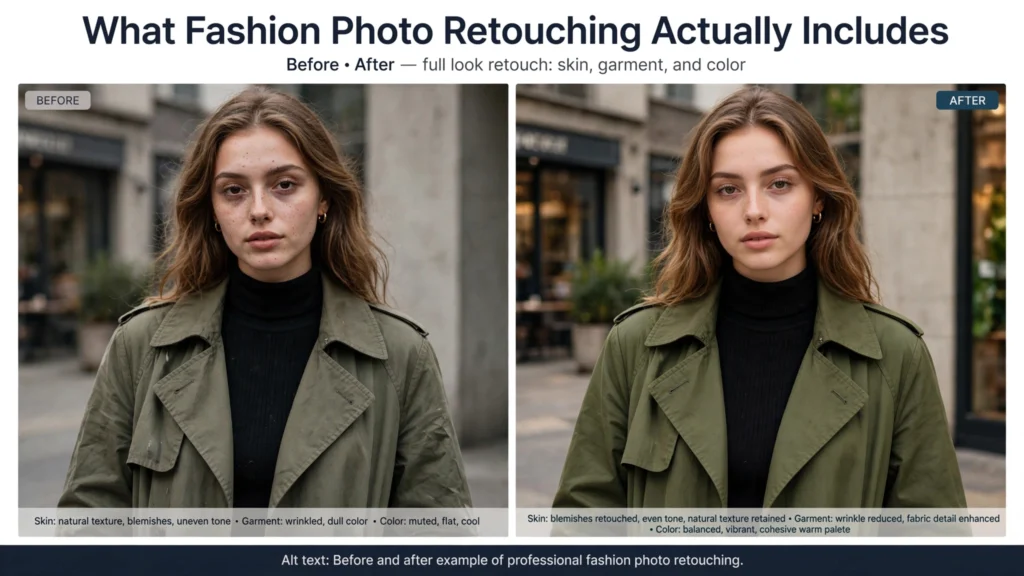
What Fashion Photo Retouching Actually Includes
Fashion retouching sits somewhere between portrait work and creative direction. It’s not just “clean up the skin.” A full-service fashion retouch typically covers:
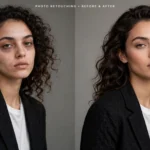
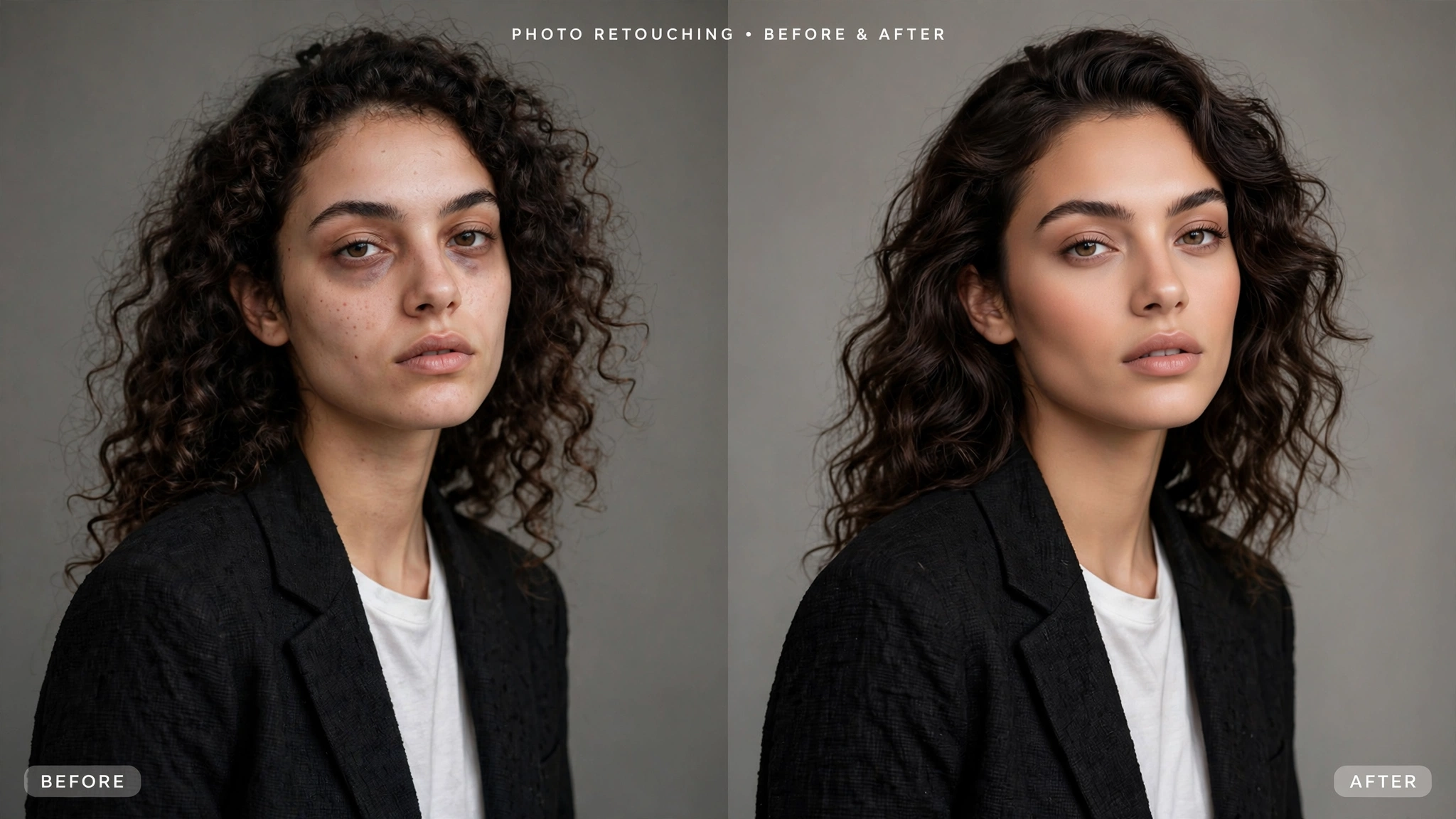
Skin retouching. Smoothing texture, evening tone, and reducing blemishes while keeping the skin looking like skin. This is the part most people think of first, and it’s also where inexperienced editors do the most damage. Overworked skin looks plastic under studio lighting or in print, and it’s an easy way to lose a client’s trust.
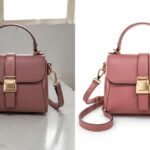
Garment retouching. Removing stray pins, clips, or tape used to fit clothing on set. Smoothing wrinkles or fabric bunching that a stylist didn’t catch. Correcting fit issues so the garment reads the way it’s supposed to. This step gets skipped by editors who only have e-commerce experience, since product shots rarely deal with clothing on a moving body.
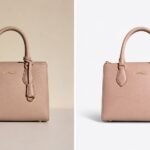
Color grading and correction. Making sure skin tones, garment colors, and backgrounds are accurate and consistent from shot to shot. A campaign shot at three different times of day, under three different lighting setups, needs color work to look like one shoot instead of three.
Background work. Cleaning up or replacing backdrops, removing set clutter, and sometimes compositing elements from multiple frames into one final image.
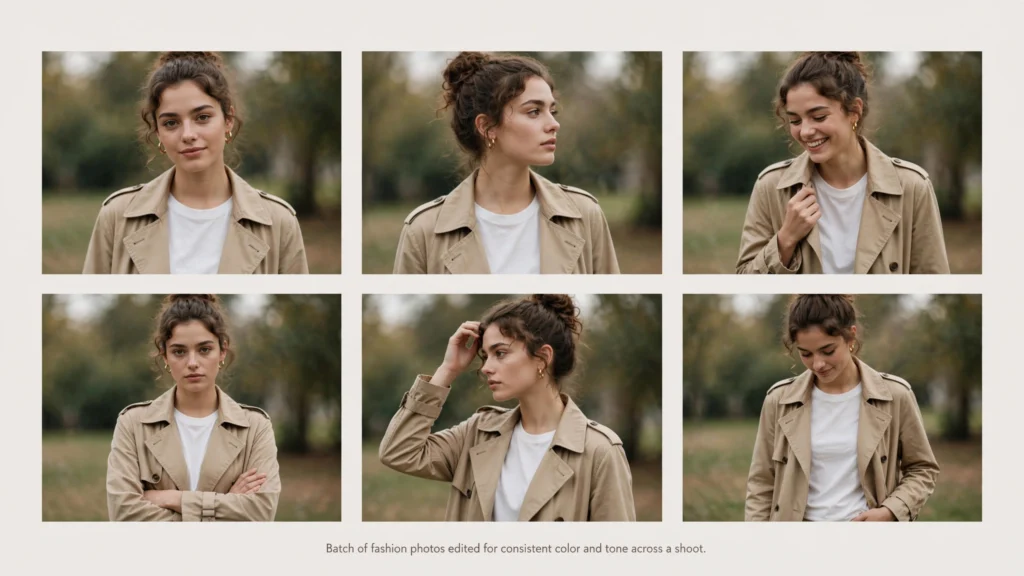
Batch consistency. This is the part that separates fashion retouching from a single polished portrait. A lookbook or campaign might run 50 to 300 final images, and every one of them needs to match in tone, color, and treatment. Getting one image right is easy. Getting three hundred images to look like they were edited by the same hand, on the same day, is the actual job.
The High End Glamour Retouching Services offered by Image Editing Asia cover this ground specifically for editorial and glamour work, including HDR blending, digital makeup application, and the kind of subject enhancement that avoids the “overdone” look. If you’ve read up on beauty and fashion product photo editing already, this is the natural next step once you’re working with full campaign or lookbook shoots rather than single product images.
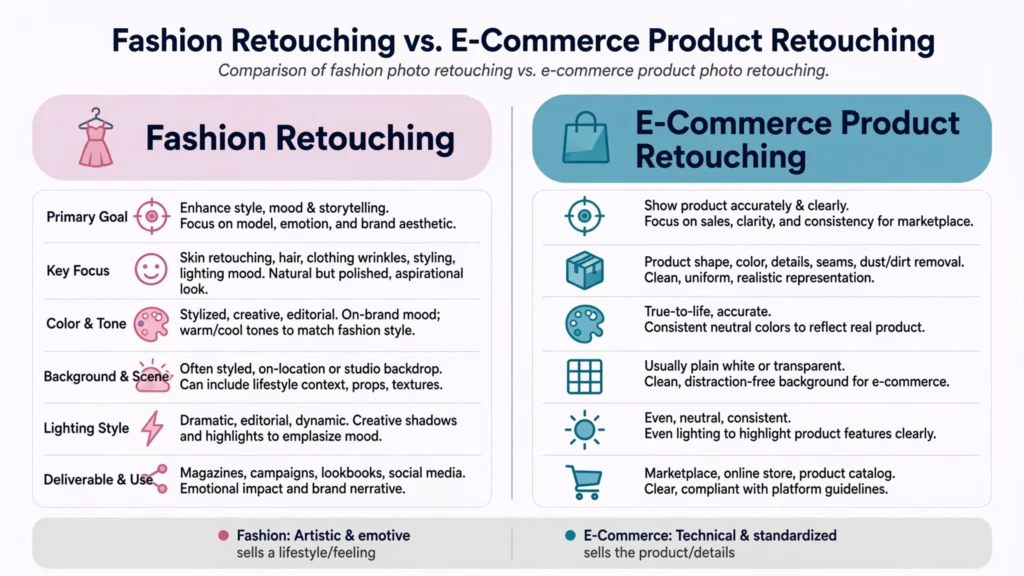
Fashion Retouching vs. E-Commerce Product Retouching
These two get lumped together constantly, but they solve different problems. Here’s how they actually differ:
| Fashion / Editorial Retouching | E-Commerce Product Retouching | |
|---|---|---|
| Primary subject | Model, garment on a body, full scene | Product on its own, often on white or plain background |
| Main focus areas | Skin, fabric drape, color story, mood | Clean edges, accurate color, background removal |
| Consistency demands | Across an entire shoot’s visual narrative | Across a product catalog’s listing style |
| Typical volume per project | 50–300+ images per shoot | Hundreds to thousands of SKUs |
| Common techniques | Skin retouching, frequency separation, color grading, compositing | Clipping path, background removal, shadow creation, ghost mannequin |
| Turnaround expectations | Often tied to a campaign or publication deadline | Often tied to a product launch or listing schedule |
If your business does both, which is common for apparel brands, you likely need a provider who’s genuinely comfortable in both lanes. Image Editing Asia’s Portrait Photo Retouching Services and Jewelry Photo Retouching Services sit closer to the fashion side of that table, while the e-commerce product image editing services cover the catalog side.
Why Brands and Studios Outsource This Instead of Hiring In-House
Building an in-house retouching team means hiring people, training them on your brand’s specific look, buying and maintaining software licenses, and then hoping your shoot volume stays steady enough to keep them busy. Most brands and studios don’t have consistent enough volume to justify that overhead.
Outsourcing solves a few specific problems:
- You pay for what you use. Volume swings with the season. A studio doing three shoots one month and none the next doesn’t need a full-time retoucher on payroll during the slow month.
- Specialized skill without the hiring risk. Skin and garment retouching at a glamour or editorial level takes years to get genuinely good at. Finding, vetting, and retaining that talent internally is its own project.
- Faster turnaround at volume. A dedicated retouching team working on your images full time can usually move through a batch faster than one in-house person juggling other responsibilities alongside editing.
- Consistency across large batches. A team that’s already built workflows for batch consistency will typically deliver more uniform results across 200 images than someone doing it solo, one frame at a time.
None of this means outsourcing is automatically the right call for every studio. If you’re only shooting a handful of portraits a month, an in-house editor or even doing it yourself might make more sense. The math changes once you’re regularly producing lookbooks, campaigns, or catalog shoots at real volume.
How Pricing and Turnaround Typically Work
Fashion retouching pricing is usually quoted per image or per shoot, and it scales with complexity. A basic color correction pass costs less than full skin retouching, garment cleanup, and background compositing combined. Providers who handle both product and fashion work, including Image Editing Asia, generally offer tiered pricing where more advanced techniques (skin retouching, layer masking, custom background work) sit at a higher rate than basic adjustments. Check a provider’s published pricing page directly for current rates, since these shift and vary by order volume.
Turnaround time depends on batch size and how much manual work each image needs. A rush job on 20 images moves faster than a full 300-image lookbook needing skin, garment, and color work on every frame. If you’re working against a hard publication or launch date, say so upfront. A provider that can’t commit to your timeline before you send files is better to find out about early, not after the shoot.
What to Ask Before Hiring a Fashion Retouching Service
Use this as a working checklist when you’re evaluating providers:
- Can I see sample work specific to fashion or editorial retouching, not just e-commerce product shots? Skin and garment work is a different skill than clipping paths.
- What’s the revision policy? How many rounds are included, and what happens if the first pass misses your brand’s look?
- How do you handle consistency across a large batch? Ask specifically how they keep 100+ images looking like one shoot rather than 100 individually edited photos.
- What file formats and resolutions do you deliver? Print work and web work often need different specs.
- What’s the realistic turnaround for my batch size? Get a straight answer tied to your actual volume, not a generic “24 hours” that only applies to simple product shots.
- Can I start with a small batch before committing to the full shoot? A trial run on 10 to 20 images tells you a lot before you hand over an entire campaign.
- How do you handle communication during the project? Especially useful if your shoot has a specific creative direction or mood board you need followed.
If a provider offers a free trial, that’s a low-risk way to test their skin and garment work before committing a full shoot’s worth of images and budget.
Common Mistakes Brands and Studios Make
Not briefing the mood or style upfront. “Make it look good” isn’t a brief. Reference images, mood boards, or notes on how much retouching is appropriate (natural vs. heavily stylized) save both sides a lot of back-and-forth.
Assuming any product editor can do glamour-level skin work. Someone who’s spent years perfecting clipping paths and white backgrounds hasn’t necessarily spent equal time on skin retouching or garment fit correction. Ask for fashion-specific samples, not general portfolio work.
Underestimating what batch consistency actually requires. It’s easy to get one image looking great. It’s a different problem entirely to make 200 images from the same shoot look like they were treated identically. If a provider can’t speak to how they handle this, that’s worth a follow-up question.
Skipping the small test batch. Sending an entire shoot to a new provider without testing a handful of images first is a common way to end up unhappy with the full delivery. A test batch catches style mismatches early, when they’re still cheap to fix.
Not accounting for what retouching can’t fix. Retouching improves what’s already there. It doesn’t rescue a shot that was poorly lit or badly composed to begin with. If the original photography has real problems, no amount of post-production is going to fully solve that.
How the Process Typically Works
Most fashion retouching engagements follow a similar shape, regardless of provider:
- Brief and upload. You share the images along with direction on style, mood, and any brand-specific guidelines.
- Initial edit pass. The team works through the batch applying skin, garment, color, and background treatment consistent with your brief.
- Review. You look over the delivered images against your original brief.
- Revisions. Adjustments get made based on your feedback, within whatever revision policy the provider offers.
- Final delivery. Files come back in the format and resolution you specified, ready for print, web, or campaign use.
The exact details vary by provider, so confirm the specifics (timelines, number of revision rounds, file handling) before your shoot goes out the door.
Is This the Right Fit for Your Shoot?
If you’re running occasional single portraits, this level of service is probably more than you need. If you’re producing lookbooks, campaigns, or editorial content on any kind of regular cadence, and you need every image to hold up to the same standard while hitting a real deadline, a dedicated fashion retouching service is built for exactly that.
Image Editing Asia’s Retouching Services cover the full range from portrait to high-end glamour work, and the free trial is a straightforward way to test a small batch before committing a full shoot. If your brand also handles product photography alongside fashion work, it’s worth looking at how product image retouching and fashion retouching can run through the same workflow so your catalog and your campaign images come from one consistent process.