If you sell online, you already know the real cost of product photography isn’t the shoot. It’s everything that happens after. A single afternoon behind the camera can turn into a week of cropping, background removal, color fixes, and re-exports before a single image is ready to publish. That gap between “photo taken” and “photo store-ready” is exactly why so many brands hand editing off to a dedicated team instead of doing it themselves.
Outsourcing product photo editing means sending your raw images to a specialist team who handle background removal, retouching, color correction, and formatting, so your in-house time goes toward running the business instead of pushing pixels. It’s not about being unable to use Photoshop. It’s about whether your time and your team’s time are better spent somewhere else.
Use Our Free Trial, You’ll Love it: https://imageeditingasia.com/free-trial/
What “Outsourcing Product Photo Editing” Actually Covers
This isn’t just background removal. A full outsourced editing workflow usually includes several distinct services, and knowing the difference matters when you’re evaluating a vendor or a quote.
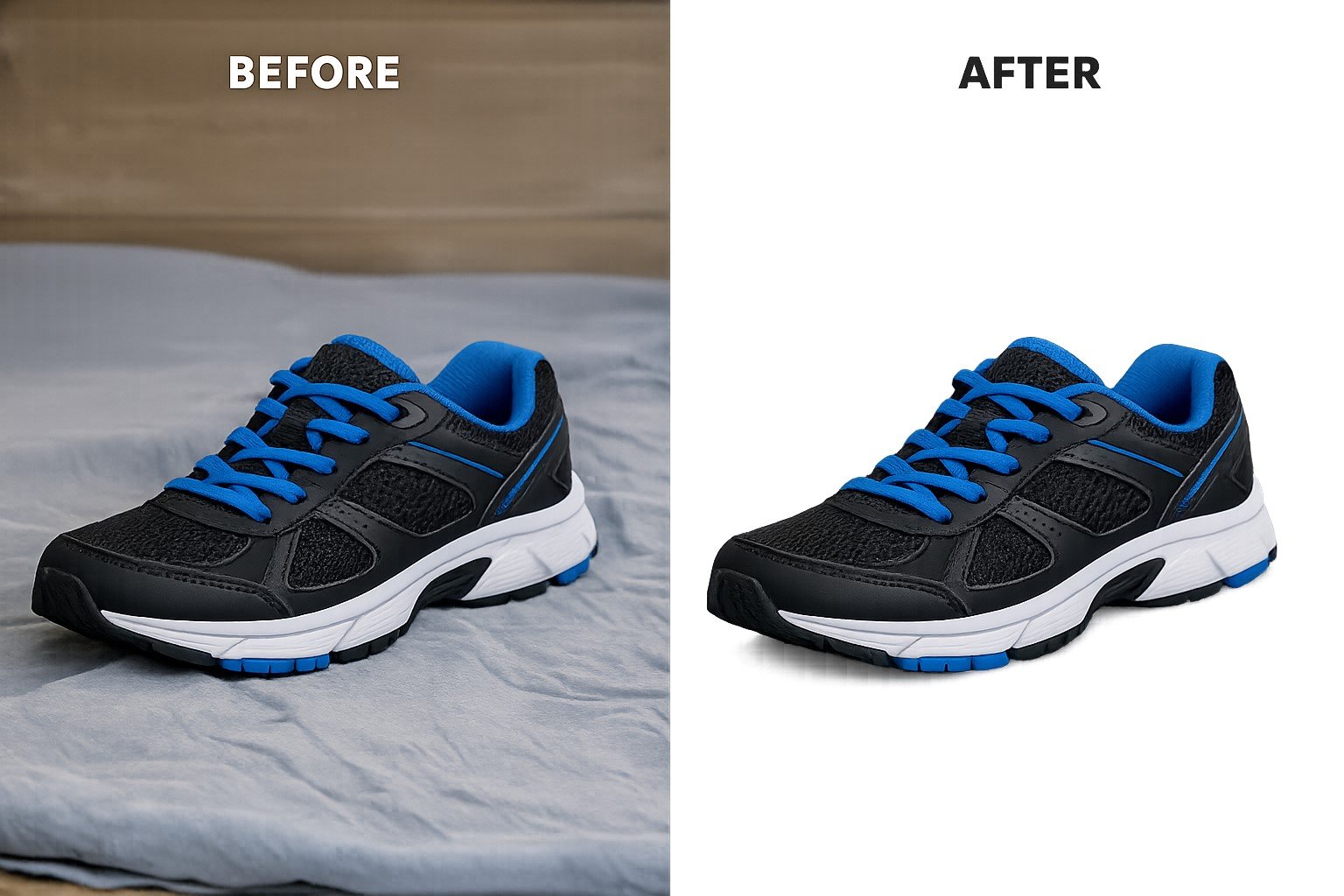
Clipping path and background removal. A clipping path is a hand-drawn outline used to isolate a product from its background, which is what makes clean marketplace-style images possible. This is the foundation most other edits build on.
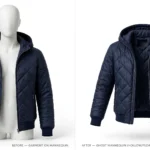
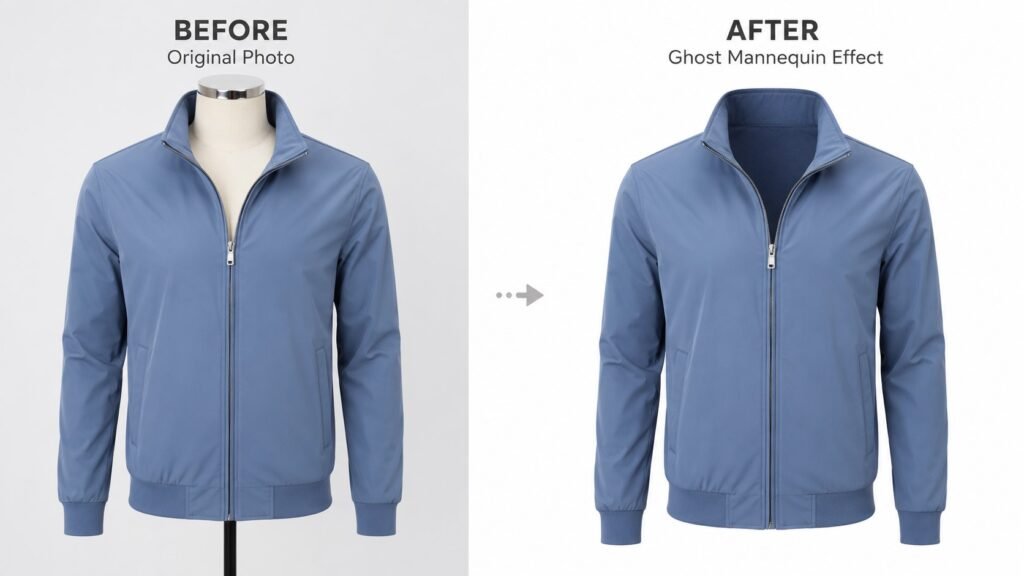
Ghost mannequin editing. For apparel shot on a mannequin or hanger, ghost mannequin (sometimes called “neck joint”) editing removes the mannequin and reconstructs the missing sections, like the inside of a collar, so the garment appears to float with a natural 3D shape.
Shadow creation. Flat product shots often look artificial without a shadow. Editors add natural, drop, or reflection shadows to give a product depth and make it look like it belongs in a real space rather than pasted on a white square.
Color correction. This adjusts hue, saturation, and exposure so a product’s true color shows up consistently across your whole catalog, which matters more than it sounds like once you have hundreds of SKUs shot under slightly different lighting.
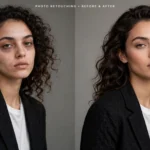
Retouching. This covers dust removal, wrinkle smoothing, scratch repair, and general cleanup that turns a technically fine photo into one that actually sells the product.
Image masking. For complex edges like hair, fur, or fabric with fine detail, masking does what a simple clipping path can’t: separate intricate, semi-transparent, or textured edges cleanly.
Most outsourced vendors, including Image Editing Asia, offer these as individual services so you can order exactly what a given batch of images needs rather than paying for a bundle you don’t.
Use Our Free Trial, You’ll Love it: https://imageeditingasia.com/free-trial/
What Does It Actually Cost?
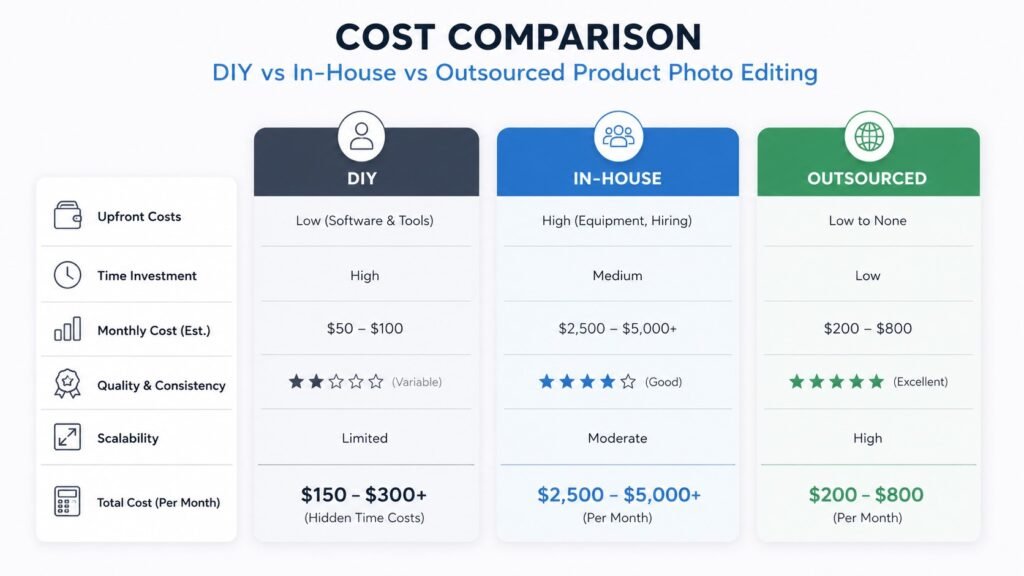
This is where the outsourcing decision usually gets made or broken. Here’s a realistic breakdown of the three paths available to most brands.
| Approach | What you’re really paying for | Where it breaks down |
|---|---|---|
| DIY (you or a team member edits) | Your own time, plus software licenses (Photoshop/Lightroom subscriptions) | Cheap per image in dollars, expensive in hours. A non-specialist editing 200 images can easily lose 2–3 full workdays to a task a specialist finishes in a fraction of the time |
| In-house hire | Salary, benefits, training, software, management overhead | Makes sense only at high, steady volume. A slow month still costs a full salary; a busy month can still create a backlog if one person is your only editor |
| Outsourced editing service | Per-image or per-batch rate, no salary or software overhead | Costs scale with volume, and per-image rates typically drop as batch size increases |
Image Editing Asia’s published rates, for example, run around $0.60 per image across core services like e-commerce editing, retouching, and general image editing, with the exact rate depending on complexity and batch size. That per-image simplicity is the appeal: you know your cost before you commit, and there’s no fixed overhead sitting on your books during a slow month.
The real math isn’t “in-house vs. outsourced cost per image.” It’s “cost per image plus the value of the hours your team gets back.” A founder or marketer spending four hours a week on photo cleanup isn’t spending those four hours on marketing, customer service, or sourcing new products. That’s the actual trade-off.
Use Our Free Trial, You’ll Love it: https://imageeditingasia.com/free-trial/
Why Quality Doesn’t Have to Suffer
The most common hesitation about outsourcing is quality control. Reasonable concern, but it’s manageable if you approach it right.
Marketplace compliance is non-negotiable, and a specialist team handles it as routine. Amazon, for instance, has specific published requirements: pure white backgrounds for main images, no watermarks or added text, and minimum resolution so the zoom feature works properly. A dedicated editing team processes these requirements daily across many clients, so compliance isn’t a special request, it’s the default output.
Consistency across a catalog is harder to achieve solo than people expect. If you’re editing your own images between other tasks, subtle differences creep in: slightly different white balance from batch to batch, inconsistent shadow angles, cropping that varies image to image. A dedicated team working from a style guide catches these inconsistencies because that’s the entire job, not a side task squeezed between other responsibilities.
Revisions are built into the process, not an afterthought. Reputable services expect you to send feedback on a first batch and adjust from there. Don’t treat the first delivery as final. Treat it as the calibration round.
A Decision Framework: Should You Outsource Right Now?
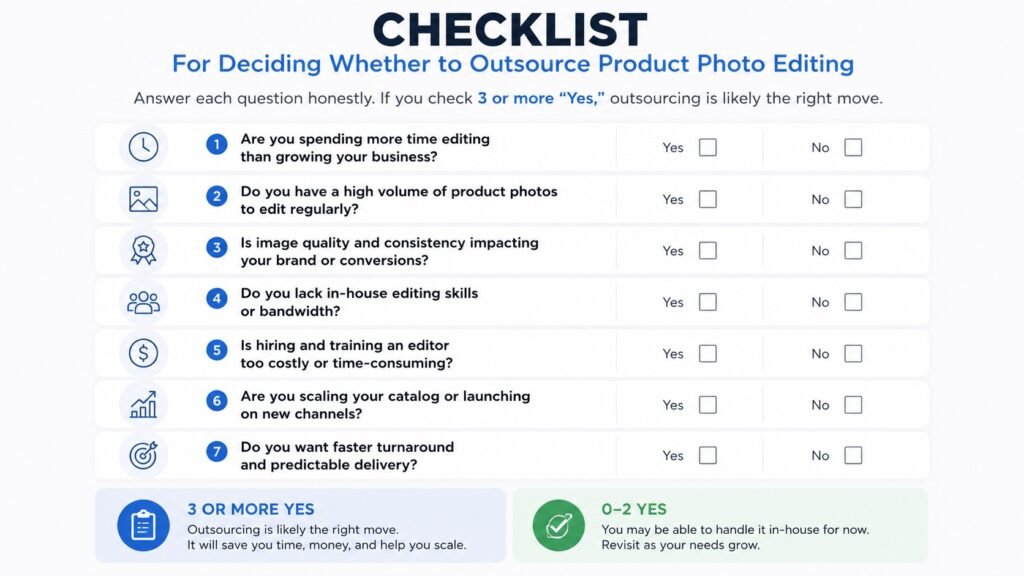
Use these questions to figure out where you actually stand, rather than going by gut feeling.
How many product images do you process per month? Under 20–30 images a month, DIY or an occasional freelancer may genuinely be more practical than setting up a vendor relationship. Once you’re routinely into the hundreds, the time saved starts outweighing the setup effort of finding and onboarding a service.
Do you have in-house design capacity, and is it fully occupied already? If your only designer is also doing your social graphics, your email templates, and your website banners, product photo editing is competing for their time against other work that also matters. Outsourcing the repetitive editing frees them for the work that actually needs a designer’s judgment.
Do you sell on marketplaces with strict image requirements? Amazon, Etsy, and similar platforms have specific technical rules. If you’re not confident your images meet spec every time, that’s a signal a specialist workflow is worth the cost just to avoid listing rejections.
Do you have seasonal or launch-driven spikes in image volume? If your catalog roughly doubles before a seasonal push or a new collection drop, hiring a permanent in-house editor to cover that spike means paying for idle capacity the rest of the year. An outsourced vendor scales up for the spike and back down without you carrying that cost year-round.
Is your current turnaround time actually a problem? If you’re sitting on unedited product photos for a week or more before they go live, that’s lost selling time. If your current setup keeps up fine, there’s less urgency to change anything.
If you answered “yes” to two or more of these, outsourcing is worth a real trial rather than a maybe-later.
Use Our Free Trial, You’ll Love it: https://imageeditingasia.com/free-trial/
A Realistic Example: Editing 500 Product Images
To make this concrete, here’s roughly how a mid-size batch moves through an outsourced workflow.
Day 1: Submission. You upload 500 raw images along with a short style guide: background type (usually pure white for marketplace listings), shadow style if any, and any product-specific notes (for example, “these 50 jewelry shots need extra reflection retouching”).
Day 1–2: Processing. The editing team works through the batch, applying clipping paths, background removal, color correction, and shadow creation as specified. Bulk orders like this typically fall into a lower per-image bracket than small one-off orders, since batching similar tasks is more efficient for the editing team too.
Day 2–3: Delivery and review. You receive the finished images, usually within a 24 to 48 hour window depending on complexity and volume. You review a sample against your style guide before accepting the full batch.
Day 3: Revisions if needed. If a subset needs adjustment, for instance a shadow angle that doesn’t match your other images, you flag it and the team fixes just that portion rather than reworking the entire batch.
That’s the entire cycle: a task that would take an internal team most of a week compressed into a few days, without pulling anyone off their regular job.
Common Mistakes to Avoid When Outsourcing
Skipping the trial batch. Don’t hand over your full catalog on day one. Send a small test batch first, using a free trial if the vendor offers one, so you can judge quality before committing volume.
Not providing a style reference. “Make it look good” isn’t a brief. Send 2–3 examples of exactly how you want backgrounds, shadows, and cropping to look. This is the single biggest driver of first-batch quality.
Ignoring your marketplace’s specific image rules before you submit. If you’re selling on Amazon, check their current image requirements before your shoot, not after editing is done. Fixing a resolution problem after 500 images are edited costs more time than catching it before the shoot.
Treating your first delivery as final instead of a starting point. Give specific feedback on the first batch (not just “this looks off,” but “the shadow should be softer and angled to the left”) so the team can calibrate to your standard for every batch after.
Assuming one vendor fits every product type. Jewelry, apparel, and furniture all need different editing approaches. Ghost mannequin work, for example, only applies to garments, not to a product like a coffee mug. Make sure the service you pick actually handles your specific product category well, not just generic background removal.
When DIY Still Makes Sense
Outsourcing isn’t the right call for everyone, and it’s worth saying so plainly. If you’re shooting a handful of products a month, have a designer with time to spare, or need highly specific creative direction that’s hard to communicate in a brief, doing it yourself or in-house can still be the better fit. The decision framework above exists precisely because “always outsource” isn’t a real rule. It’s a volume and capacity question specific to your business.
Getting Started
If your product catalog has grown past what you can comfortably edit yourself, or your in-house designer is stretched across too many jobs, testing an outsourced workflow costs you almost nothing to find out. Image Editing Asia’s free trial lets you send a small batch through the real process, background removal, shadow creation, color correction, before deciding whether to commit to your full catalog. You can also look at the full breakdown of e-commerce product image editing services to see which specific services your catalog actually needs before you send anything over.
The brands that outsource well don’t do it because editing is hard. They do it because their time is worth more spent somewhere else.